

There I was, about ten years old, being dragged to Catholic mass every Sunday morning. I barely paid any attention to what the priest was saying. I sometimes even brought something to read. I just didn’t see the point of it.
But more than that, I didn’t like going to church because I had a prior obligation: Super Sunday.
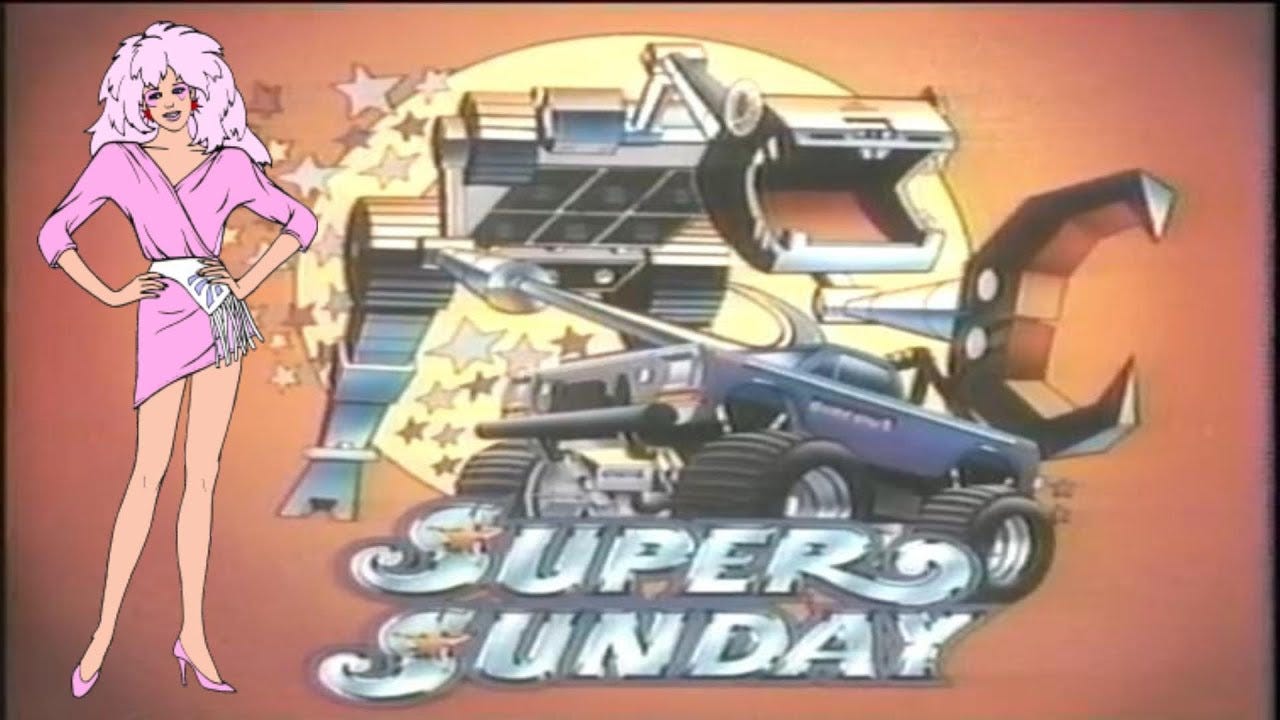
Super Sunday was what can best be described as “Sunday morning cartoons.” In the mid-1980’s, fueled by the success of Transformers, Hasbro decided to make cartoons based on some other toy lines. But as an experiment, and because there were only so many slots that they could fill on a weekday or Saturday morning, they decided to cram three properties into one half-hour show. The three shows were Jem & the Holograms, about a record executive secretly leading a rock band; Bigfoot and the Muscle Machines, about monster-truck-driving heroes; and my favorites, Robotix, which was about big robots smashing each other, and Inhumanoids, which involved giant, actual monsters, which were way cooler than monster trucks. I know that’s four shows, but they cycled through them at various points in the run. Honestly, I didn’t care much for Bigfoot or Jem, mostly because Jem was a girl and girls had cooties, and Bigfoot, well, was just a pick-up truck. But giant robots and monsters? I was all in.
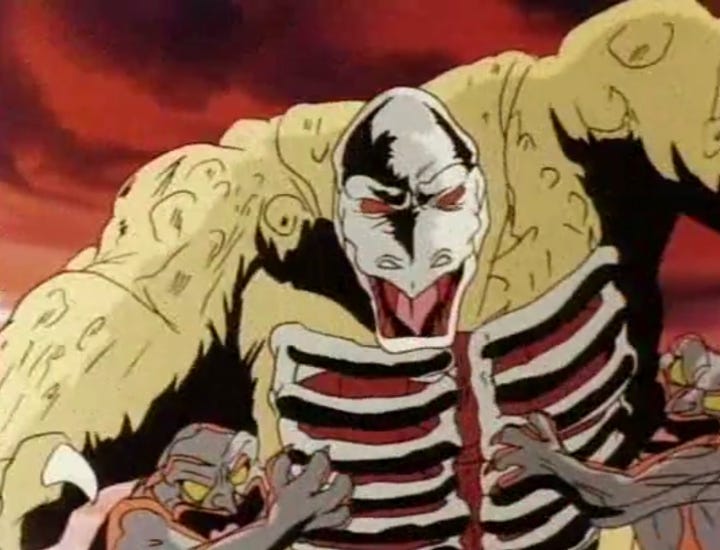
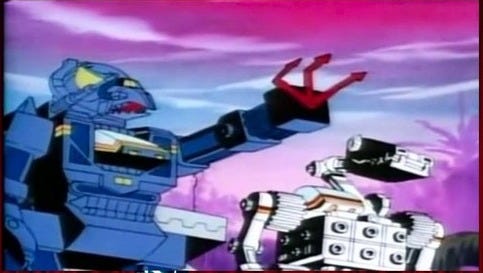
But when they were all in one show, this meant that each segment was only about six minutes long. They also always ended on a cliffhanger, so if you missed a week, you would be hopelessly lost unless there was a little recap.
Basically, if that priest took a little too long with his homily, I could miss my six minutes of monsters or robots and not have any idea what was going on in the storyline. I can’t tell you how much that would piss me off. So, not only did I not like going to church, but if it caused me to miss my shows, then I really hated it.
What might strike some folks as bizarre was how involved in the stories I was as a ten year old. You might think that I just wanted to see the big robots smash each other, and you would be correct. But I wanted to follow their adventures, as well. In fact, for a six-minute cartoon designed to sell toys, Robotix had an unexpectedly ambitious premise. An alien world. A civilization trying to rebuild after its sun exploded. Ancient robot factions. Stranded humans who could “interface” with the robots. It was a lot of science fiction to cram into what was essentially the length of a commercial break. The robots were supposedly built to rebuild civilization, although most of them looked like giant snakes and dinosaurs, so I wasn’t entirely convinced they were the right tools for the job.
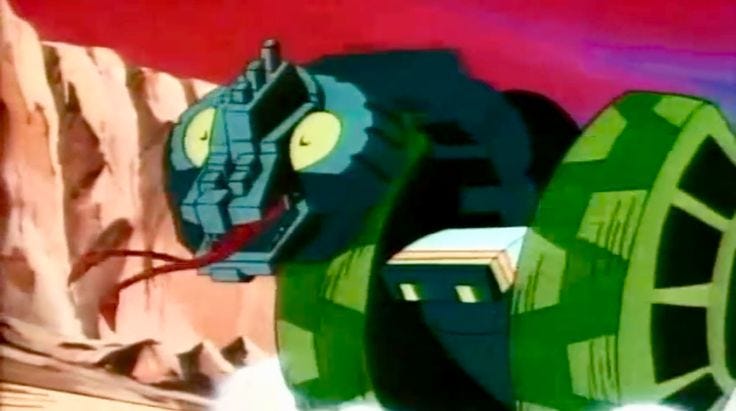
The problem was that Robotix was trying to tell a much bigger story than six minutes could reasonably contain. Every episode had to resolve the previous week’s cliffhanger, introduce a new problem, and end with another cliffhanger. There wasn’t much room left for character development or story threads to breathe. For example, one week the humans were starving because they couldn’t eat the irradiated food on Skalorr. The next week...they were fine. I was probably too young to understand production schedules and impossible deadlines, but I wasn’t too young to ask, “Where did they suddenly get food?”
Looking back, I realize Super Sunday taught me something I didn’t appreciate until years later. No, not to just relax and sit still for forty-five minutes of church - I never learned how to do that, even after Super Sunday ran its course. I actually learned the hard lesson that the adults who wrote these shows were probably doing their best, but they had a lot of restrictions placed on them. They had to write in a volcano erupting or villainous ambush every week, and cram it into six minutes. So, the stories suffered. But as much as I enjoyed the robots fighting, there was also part of me that wanted to be wrapped up in an actual plot. So I was constantly wondering why these writers weren’t coming up with better stuff for these robots to do. It didn’t dawn on me until later that this was just a gig to them, a cartoon that was supposed to sell toys. They were not being paid to come up with backstories for all of these characters. I suppose, as the kids who were playing with the toys, that was our job.
The totality of Robotix was 15 six-minute segments, which were later released on VHS. I assume the toys weren’t selling and it was axed, because the toys were not very accessible. They were cool in theory, but I don’t think kids were into them. I never had one, but looking at the commercials, they seemed like homework to me.
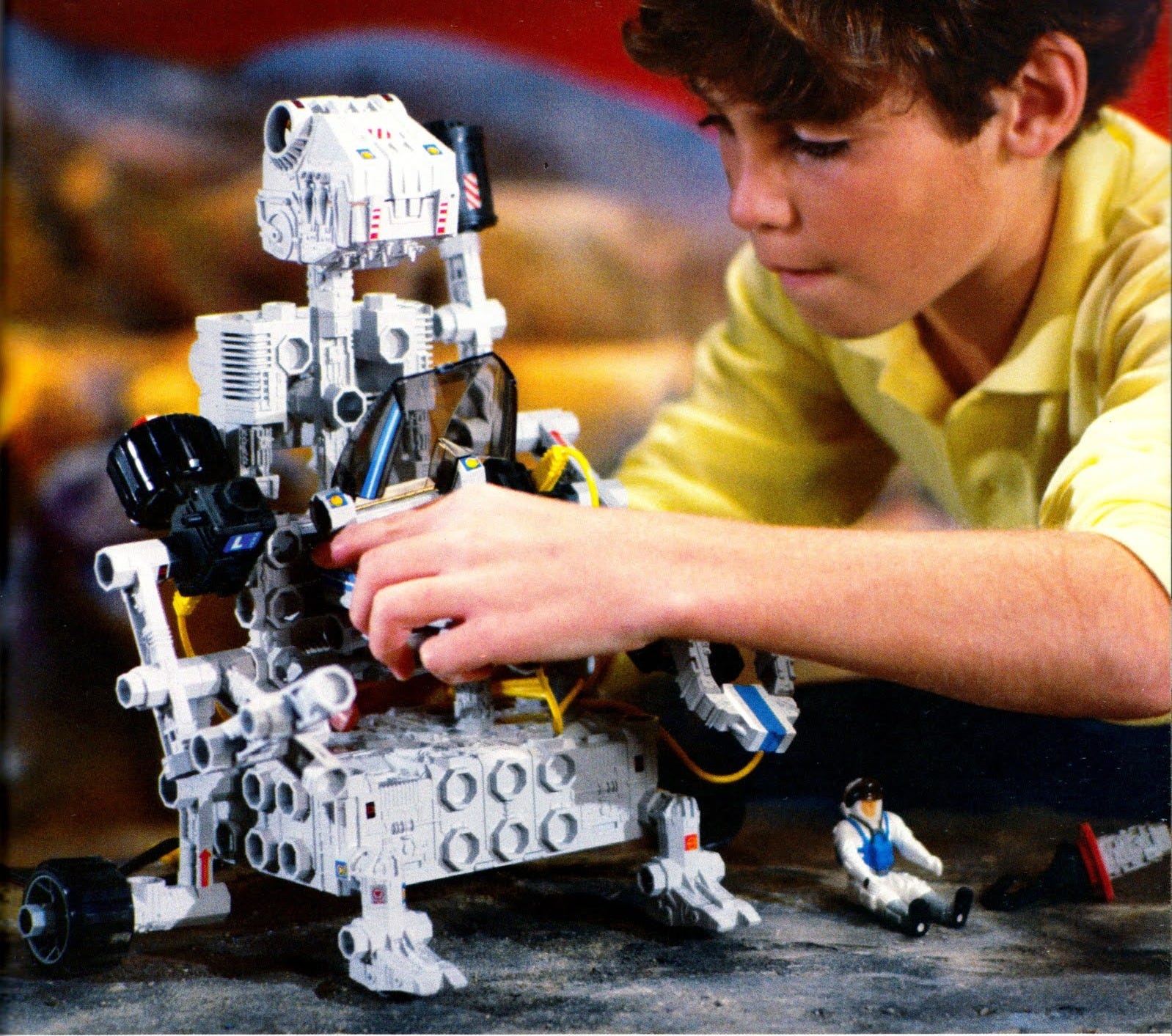
Robotix became a victim of the famous “Robot Wars” of the 80s, which was won handily by Transformers and Gobots. The full run of the show is up on Youtube. Check it out, if you’re into giant robots. I definitely did:
It was funny to watch it now, with all the cliffhangers shoehorned in. It’s easy to see the ambition, even if the format kept getting in the way. And these days, I can laugh at how seriously I took those six-minute toy commercials. But at ten years old, they weren’t toy commercials. They were stories I was following every week. And every Sunday I’d race home from church, run up the stairs, turn on the TV, praying I wasn’t already six minutes too late.