

I originally wrote a post about this movie for my site back in 2015, but I think it hits differently now.
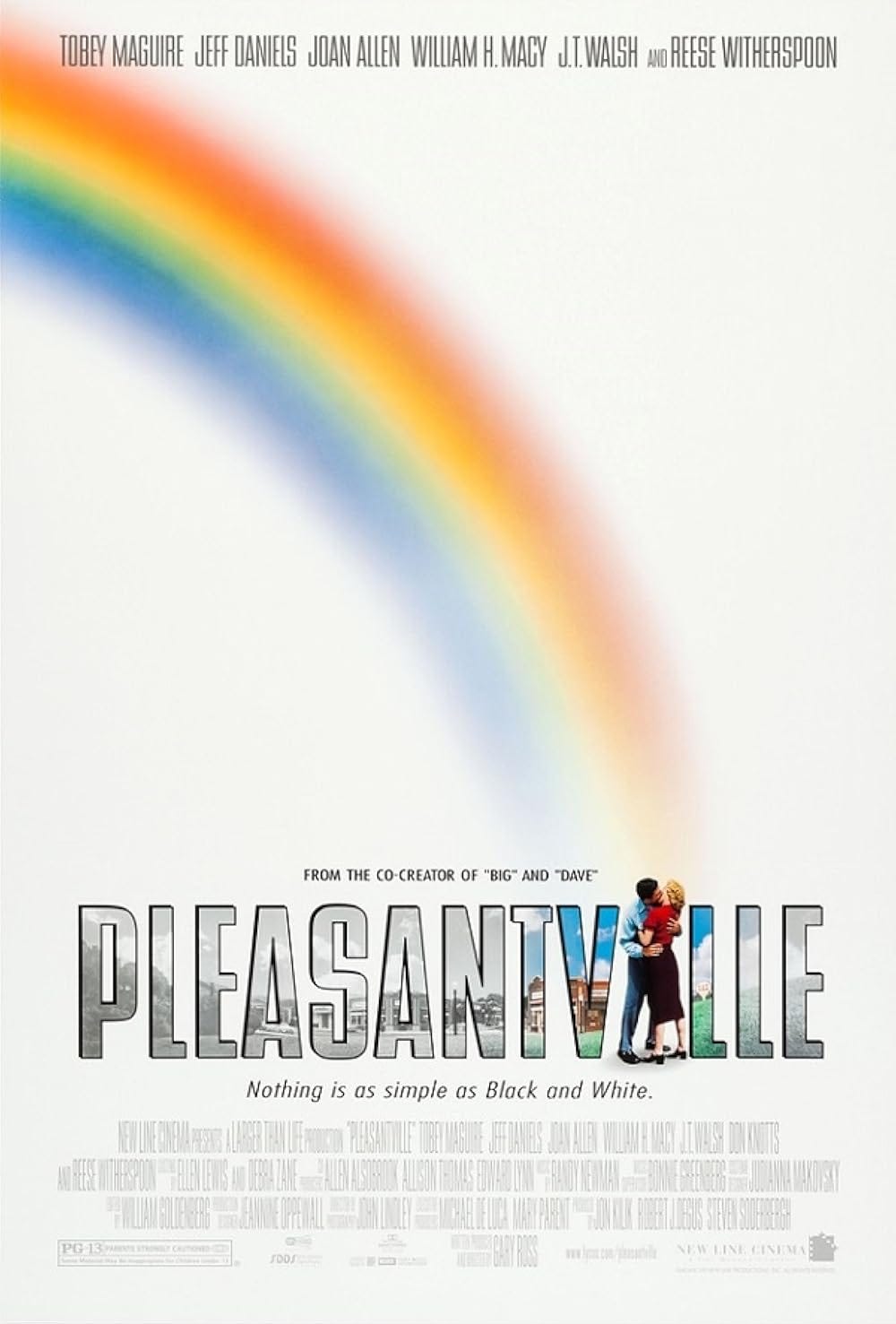
When Pleasantville came out in 1998, I thought it was a clever comedy about two teenagers who get sucked into a black-and-white, Leave It to Beaver-style sitcom. It was funny, charming, and visually inventive. I liked it quite a bit, but I don’t remember thinking it was especially profound. It was simply an entertaining way to spend two hours.
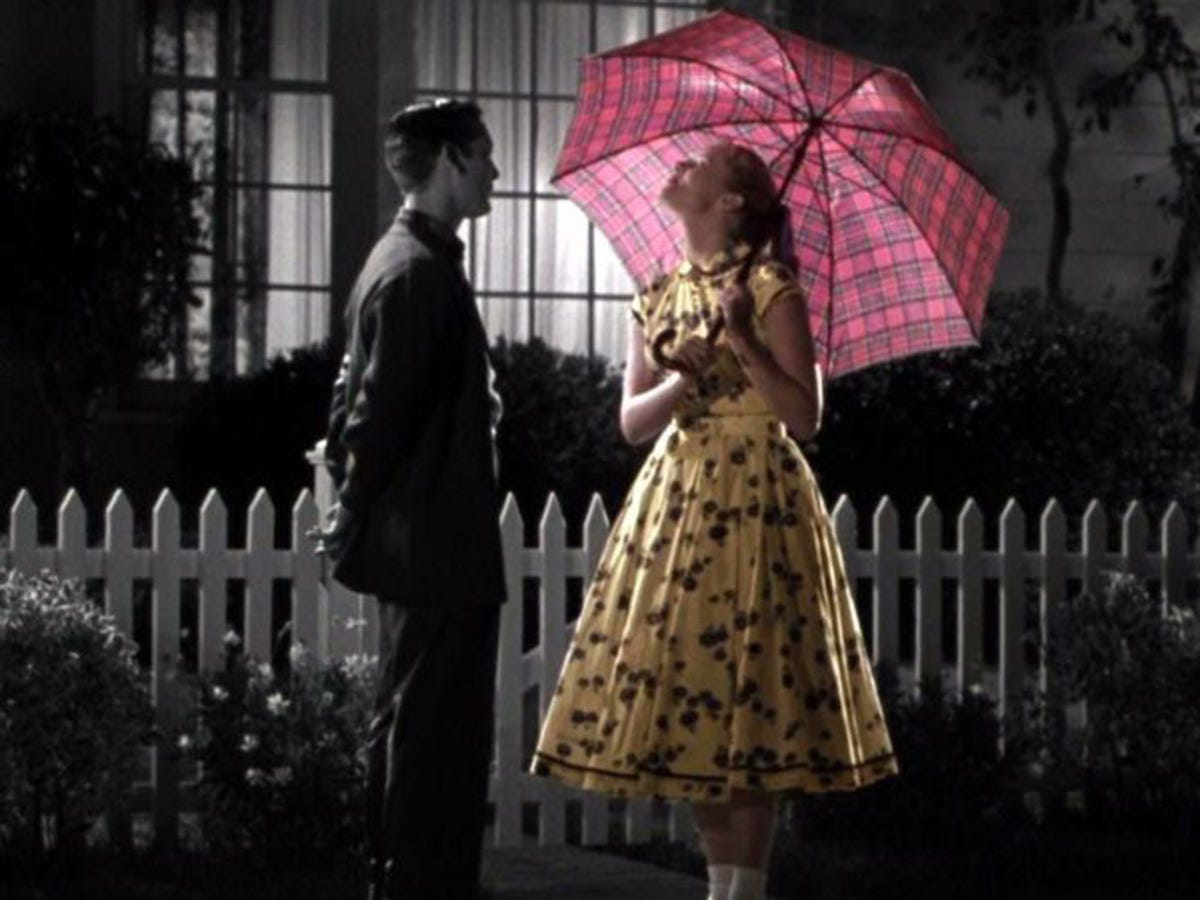
I use the term “black & white” both literally and figuratively, as there is no color in Pleasantville, and the values of the townsfolk are also pretty black and white (mostly white.) Everything has a right answer and a proper place. Also, the weather is sunny and 72 degrees every day, the fire department only exists to rescue cats stuck in trees, and the sports teams never lose, or even miss a basket. Everything is quite pleasant, in fact.
But is it really? Watching it again nearly thirty years later, I realized I had been watching the wrong movie. The jokes were still funny. The performances were still charming. But this time, what stood out wasn’t the comedy. It was the fear. The fear of change. The fear of people who didn’t fit in. The fear of books, art, new ideas, and a world that refused to stay the way it had always been.
Maybe it wasn’t just a comedy.
Maybe it was a warning.
The first crack in Pleasantville’s perfect world comes when Reese Witherspoon’s Mary Sue decides not to follow the script, and takes Paul Walker’s Skip up to Lover’s Lane. This Mary Sue takes the basketball captain to the hoop. Skip, clearly weirded out by his first sexual encounter, drives home and sees a single red rose in the bushes outside his house. Not only is it a cool metaphor because he has been de-flowered, but it is also the first hint of color in a world that never knew any.
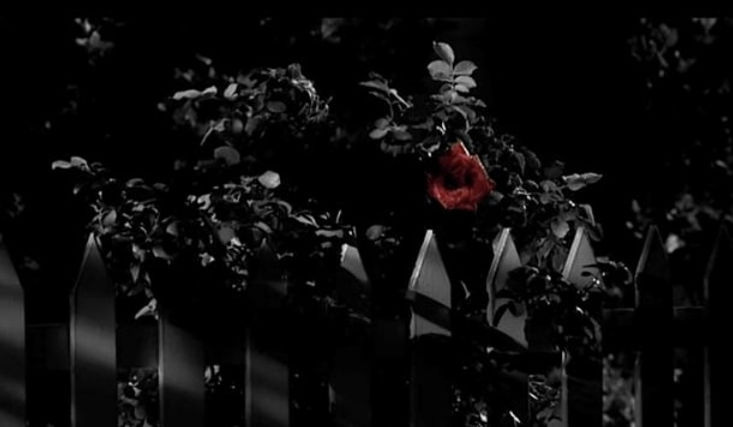
It isn’t long before other splashes of color start showing up around town, as Mary Sue has started a sexual revolution all by herself. She even has a heart-to-heart with her TV show-Mom, played by Joan Allen, and teaches her the ins-and-outs of self-stimulation (I know that’s not her real mother, but it’s still kind of weird.) Allen also becomes colorized after a little sexual healing.
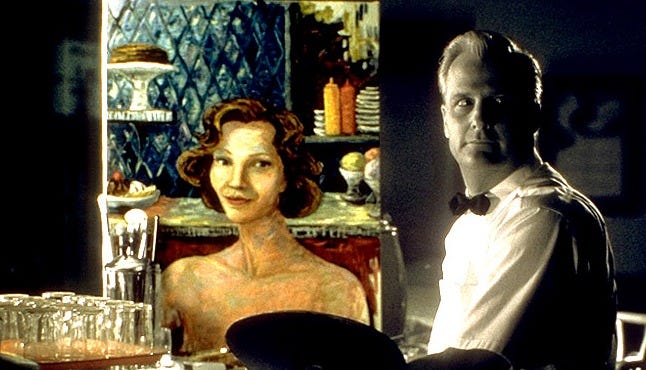
Despite his intention to play by the sitcom’s rules, Bud also begins to incite some change by encouraging some of his fellow teenagers to start reading books like Catcher in the Rye and Huck Finn. Bud also helps Mr. Johnson (Jeff Daniels), the town soda jerk, discover his artistic voice by giving him an art book after Johnson expresses an interest in painting.
The color metaphor is often mistaken to be just about race or sexuality. That is part of it, but it is also compassion, curiosity, creativity, passion and independent thought. That is why Mary Sue doesn’t instantly become colorized when she has sex. It actually happens after she falls asleep reading D.H. Lawrence, something that Jennifer in the real world never would have done. Bud himself goes color when he punches out a local bully who was terrorizing his mother. He doesn’t become colorized because he rebels. He becomes colorized because he finally stands up for someone else. So, doing something against your character. something good, can help you see the world differently, and essentially give you color.
The movie does a good job of portraying both sides of the story. Although a lot of the Pleasantville residents who remain in black-and-white are angry and resentful of all of this change, William H. Macy, who plays Bud and Mary Sue’s father, is just sad. He isn’t angry. He isn’t cruel. He’s simply grieving the loss of the only world he has ever known.
The rapid changes begin to spark riots in the streets of the town. The black-and-white residents begin burning the library books that they deem inappropriate. Johnson’s soda fountain is ransacked and his art destroyed. A colorized Bud is thrown in jail for his role in all of the chaos, when clearly all he wanted was for people to see the world in color. But fear always looks for something, or someone, to blame.
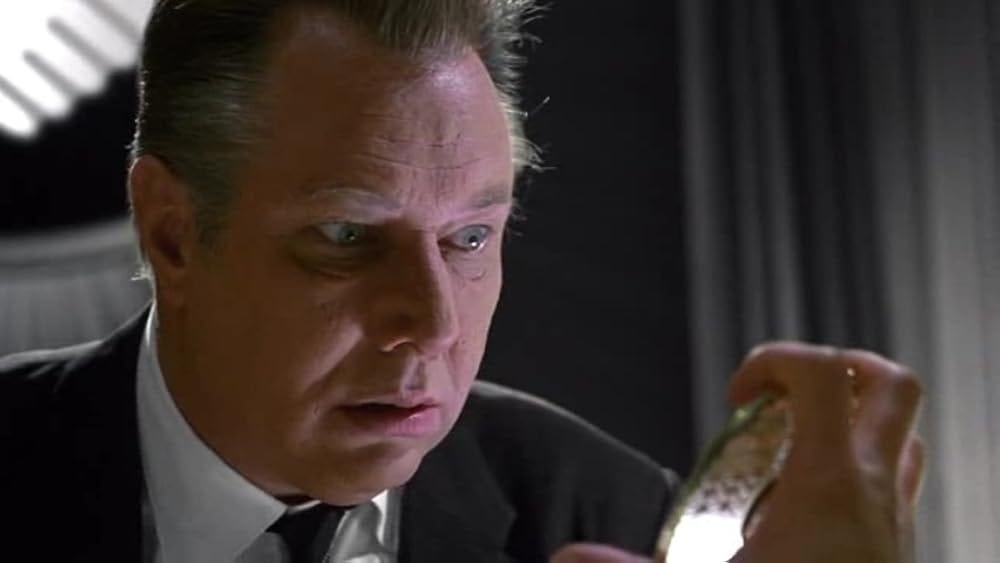
In the climactic scene, Pleasantville mayor, played by J.T. Walsh (in his final appearance) calls a special town meeting, where he basically puts Bud and Johnson on trial for painting a colorful mural on the side of the diner. While the mayor dictates that only black and gray paint colors can be used, Bud finally pushes him until the mayor loses his composure—and, with it, his black-and-white certainty.
In 1998, I thought this was a metaphor for 60’s counter-culture, and the 50’s-style sitcom was a clever backdrop, but all these years later, I see it as more than that. It’s not about the 50s or the 60s. I think it’s about what happens whenever people become convinced that yesterday was better.
Watching Pleasantville today, it’s hard not to recognize echoes of our own world. Arguments over immigration, transgender athletes, education, voting rights, artificial intelligence, even the books children should read all have something in common: they aren’t really arguments about the issues themselves. They’re arguments about change. About who gets to decide what comes next, and how much of yesterday we should try to preserve.
To me, the lesson of Pleasantville isn’t that the past was bad. It’s that a world without change eventually runs out of color. The challenge isn’t choosing between yesterday and tomorrow. It’s figuring out how to carry the best parts of yesterday into a tomorrow that’s inevitably going to look different.
Nicely done! And yes, today watching this movie comes with a different perspective. Also this has nothing to do with anything but you know those black and white pictures where just one person in a dress or something is in color? Stacey absolutely hates those. Why? I dunno, ask her! But I won’t be able to get her to watch this with me!