

This one is kind of a slippery slope, because as a baseball guy and a movie guy, I have some strong feelings about this movie, and so a lot to say. It’s also been pored over by a lot of people like me, and people actually in baseball: things portrayed in the film that may or may not be true, things that were exaggerated, or omitted. But since the MLB trade deadline is tomorrow and baseball is ramping up, I’m going to do my best at giving a take that isn’t just the same old stuff.
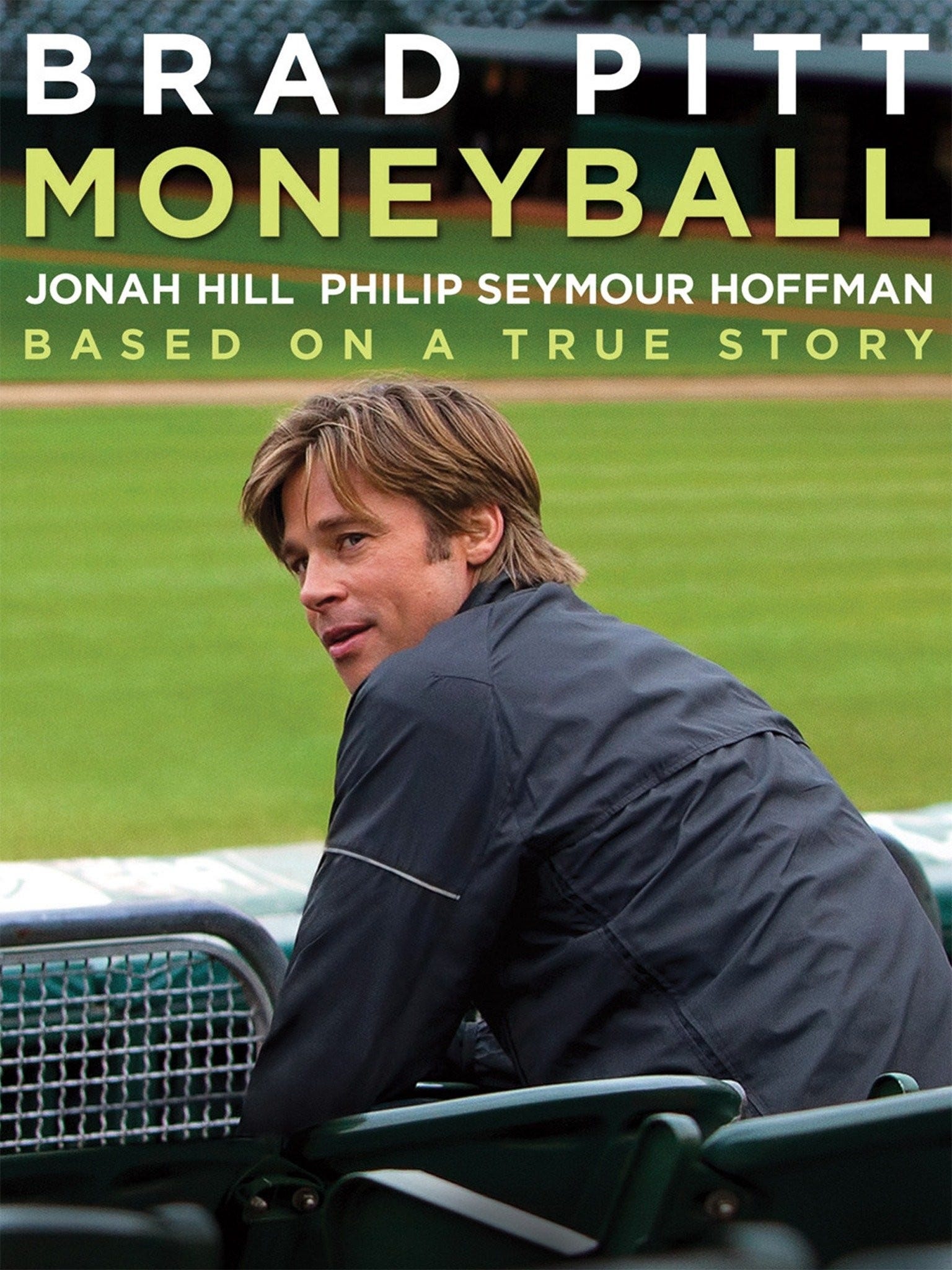
If you haven’t seen it, Moneyball, based on the book by Michael Lewis, depicts the beginnings of the historic shift in baseball, and eventually sports in general, as the General Manager of the Oakland Athletics, Billy Beane (played by Brad Pitt) adopts a new philosophy that highlights a different set of statistics and different kinds of players in order to compete with the bigger market teams. Beane must do this out of necessity, as his team is owned by a billionaire who basically doesn’t want to spend as much money as the other billionaires.
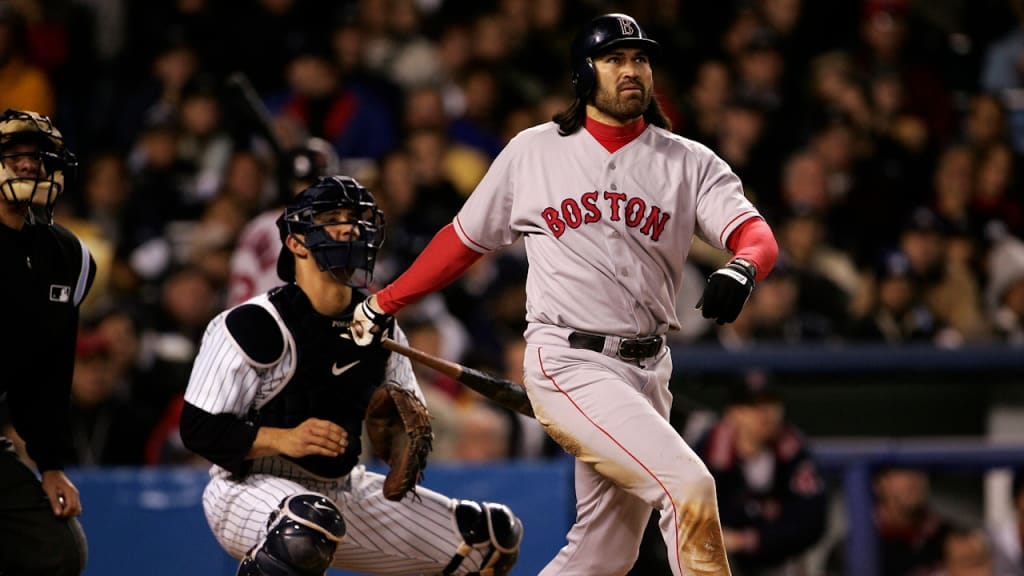
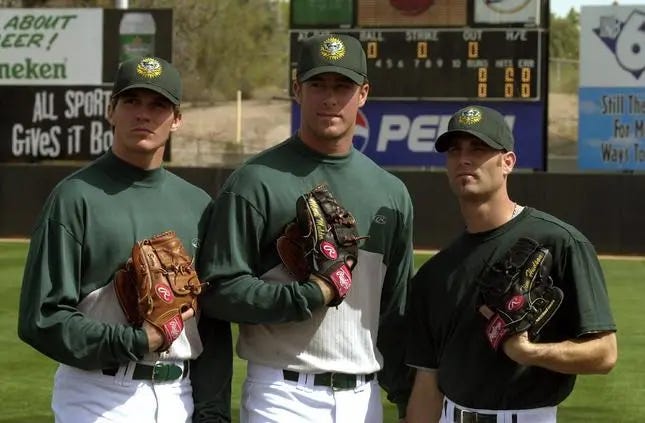
At the beginning of the film, Beane’s team, the Oakland Athletics, have just been defeated in the playoffs by the hated New York Yankees, and three of their top players are heading for free agency, and will not be returning, because Billy’s boss doesn’t want to pay them. First baseman Jason Giambi, noted power hitter and admitted steroid-user, is mentioned as signing with the Yankees, while outfielder Johnny Damon has signed with the Red Sox (my favorite team, if you must know). The third man in the trio, Jason Isringhausen, their top pitcher, is barely mentioned, but he signed with St. Louis. Beane now must find replacements within the constraints of his budget. During failed trade talks with Mark Shapiro of the Cleveland then-Indians, Billy meets Peter Brand (Jonah Hill), a special assistant to Shapiro. Peter is a young upstart who majored in Economics at Yale and who believes that there is an epidemic in baseball surrounding the judgment of talent. He feels Johnny Damon, for example, is a decent lead-off hitter, but not at all worth the $7.5 million a year that the Red Sox just paid him. Brand basically lays out sabermetrics in the simplest of terms:
“People who run ball clubs, they think in terms of buying players. Your goal shouldn't be to buy players, your goal should be to buy wins. And in order to buy wins, you need to buy runs.”
For those who don’t know or care, sabermetrics (formerly SABRmetrics, but that just looked weird) is the form of analysis personified by Peter in the movie, but it was pioneered by a a group of baseball nerds and named by head-nerd Bill James in 1980. James was an early adopter of the philosophy, but is barely mentioned in the movie. I’m sure there are “movie” reasons, but he’s just not a part of this story.

Anyway, how should baseball teams buy runs? Simply put, you sign players who can get on base. Preferably cheap players. This flew in the face of a hundred years of conventional baseball wisdom that said that batting average, runs batted in and home runs were the way to win games (Pitching is very secondary in Moneyball, but we’ll get there.). So, Billy and Pete acquire Scott Hatteberg, a catcher who could no longer catch due to nerve damage in his arm, and teach him to play first base. They also sign David Justice, a veteran outfielder who the Yankees wanted to get rid of so badly, they agreed to pay half his salary. They also sign the one pitcher highlighted in the movie, Chad Bradford, a reliever with a submarine delivery who was so happy to be there that he tells Billy that he and his family would be praying for him. Billy’s response: “No problem.”
The A’s started off that season very poorly, but at least in the movie, once everyone got onboard with the new “getting on base” philosophy, they started winning, eventually winning 20 in a row and once again making it to the playoffs, only to be eliminated early again. Beane believes his experiment failed, pointing out that unless you win the last game of the World Series, your team is nothing but a loser. However, he is then offered a $12.5 million contract to become the General Manager of the Boston Red Sox, as their owner John Henry believes in what he was doing, and a couple twists and turns are all that stood between the A’s and the championship. Beane turns it down because he doesn’t want to move across the country and be away from his daughter, but that offer, along with Pete telling him a story about some player who didn’t realize that he had hit a home run, helps him believe that maybe he wasn’t so crazy after all. Of course, the Red Sox won it all in 2004, after implementing some of Beane’s philosophies. Their leadoff hitter that year? Johnny Damon.
But there’s a lot more stuff going on here than that brief plot synopsis. Here’s a few things to note:
The story of the movie and the 20-game win streak is engrossing, and yes, Pitt’s portrayal of Beane as a lovable but very superstitious kook is excellent. But based on the book, Beane seems like a tough guy to live with, which is probably why they got someone like Brad Pitt to play him. However, he knows his baseball, as he is still with the A’s but has moved up to Senior Advisor to A’s owner John Fisher and actually part-owner of the team. Unfortunately, Fisher has landed in some hot water lately, as he decided to move the team to Las Vegas before actually getting a deal for a stadium for them to play in. The A’s are playing the 2025 season in a minor league park in Sacramento and are no longer referred to as the Oakland Athletics. They are just the Athletics. It’s kind of sad. You can see my feelings on that in this previous post.
Beane’s philosophy has certainly given hope to some journeyman ballplayers and small-market teams over the last couple decades, but it has not netted Billy any championship rings. In fact, the team hasn't won a World Series since 1989, and haven’t even played in a World Series since 1990, when they were swept by Cincinnati. Winning that last game is harder than it seems, eh, Billy?
A’s manager Art Howe, played by Phillip Seymour Hoffman, is portrayed as a grumpy old fart who hates Beane and wants to manage his team his way. Howe was never consulted on the film, and apparently was shocked to see how he was portrayed. Again, a movie is allowed to take some creative license, but Howe did win Manager of the Year in 2002 and is considered a great baseball guy. But hey, a movie needs conflict, right?
Along those lines, Peter Brand isn’t even a real person. He is loosely based on an executive named Paul DePosta. So loosely, in fact, that DePosta asked that the character’s name be changed. It does sound better when Brad Pitt calls him “Pete” in that dismissive way of his, but yeah, Pete’s not real. In fact, DePosta has moved on to the NFL, bringing sabermetrics to the Cleveland Browns. Interestingly enough, the Cleveland Browns haven’t won that last game, either. They’ve actually never even played in it.

This is kind of the problem that I, and a lot of other people, have with moneyball, not the movie, but the philosophy. And I’m going to go on a baseball rant for a bit, so feel free to skip to the end.
Here’s how I see things: as I said, the Red Sox did implement some of Beane's philosophies to field a winning team in 2004. Theo Epstein became the GM after Beane turned the position down and surrounded himself with a gaggle of young, Peter Brand-types, and these guys looked at all the stats and decided that the Sox franchise player Nomar Garciaparra’s defense was statistically costing them games. So, they traded the Boston icon and went another way. The defense improved, the pitchers could relax a little knowing that they didn’t have to strike out every batter, and they won the World Series. Yay!
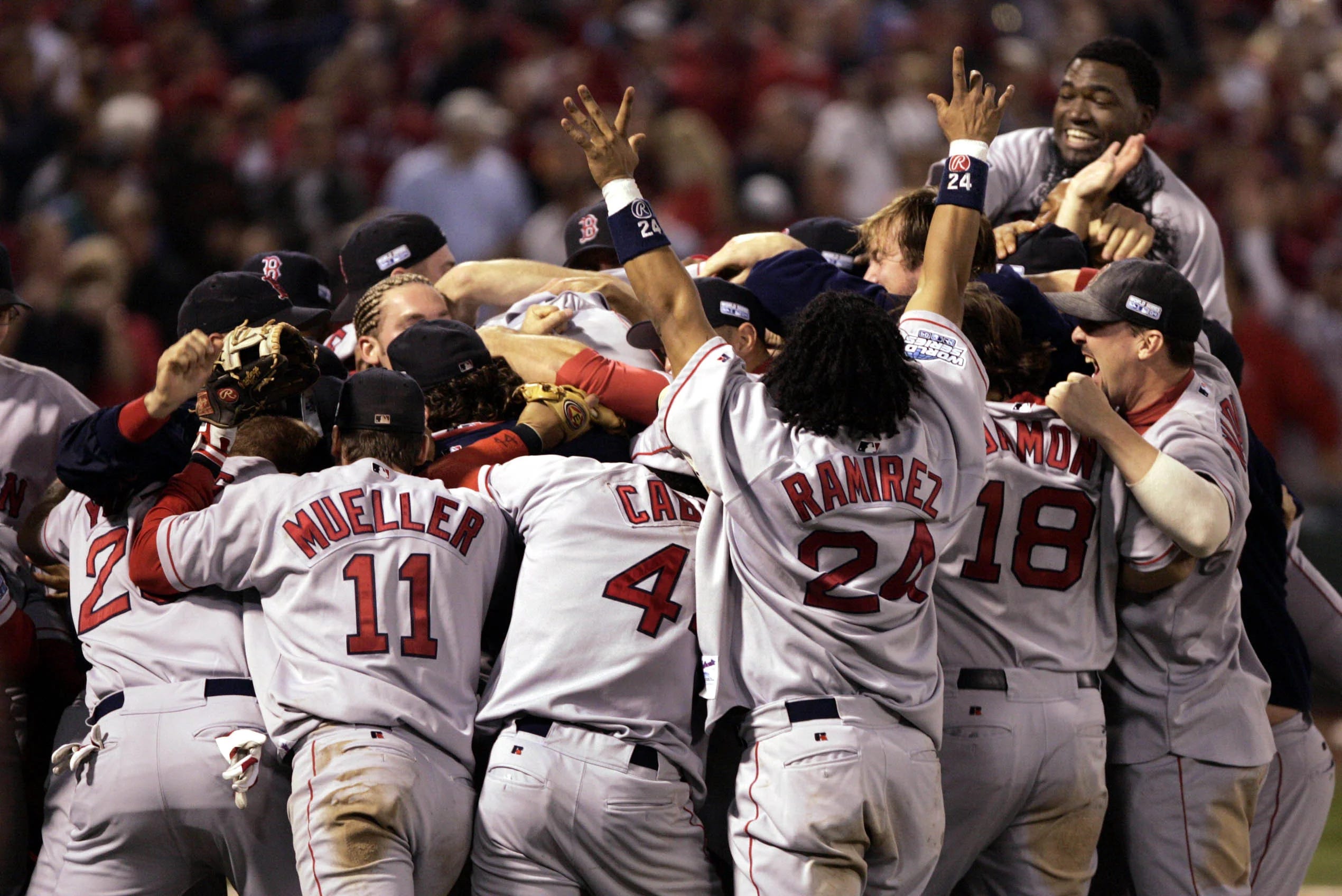
But there’s obviously more to it than that. If you watch The Comeback (which you really should do), you’ll learn that not only was Nomar’s defense sub-par, but his attitude was too, and Epstein couldn’t wait to send him packing. The argument could be made that once they got rid of the mopey guy in the clubhouse, the entire team could just relax and enjoy themselves and just win games. Where’s the stat for that?
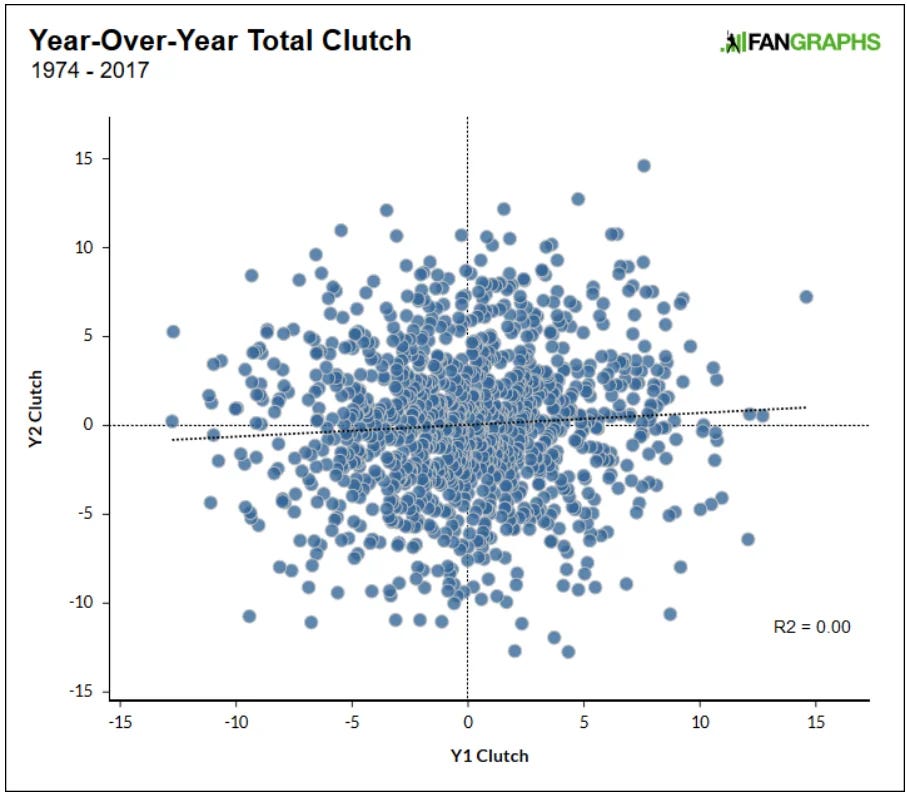
Somewhere in there, apprently.
Also, it should be noted that the core five Red Sox starting pitchers started 157 of the 162 games in 2004, which is basically unheard of over a full baseball season. My Dad always told me growing up that pitching is key in baseball, and he was definitely right when it came to the 2004 Red Sox. Interestingly enough, the 2002 Oakland A’s had what became known as the Big Three at the top of their starting rotation: Barry Zito, Mark Mulder and Tim Hudson, plus a lights-out closer in Billy Koch. None of these pitchers are featured in the movie, although there is some footage of a guy with Koch on the back of his jersey during the win-streak montage. Who knows why? Maybe because they never got on base?
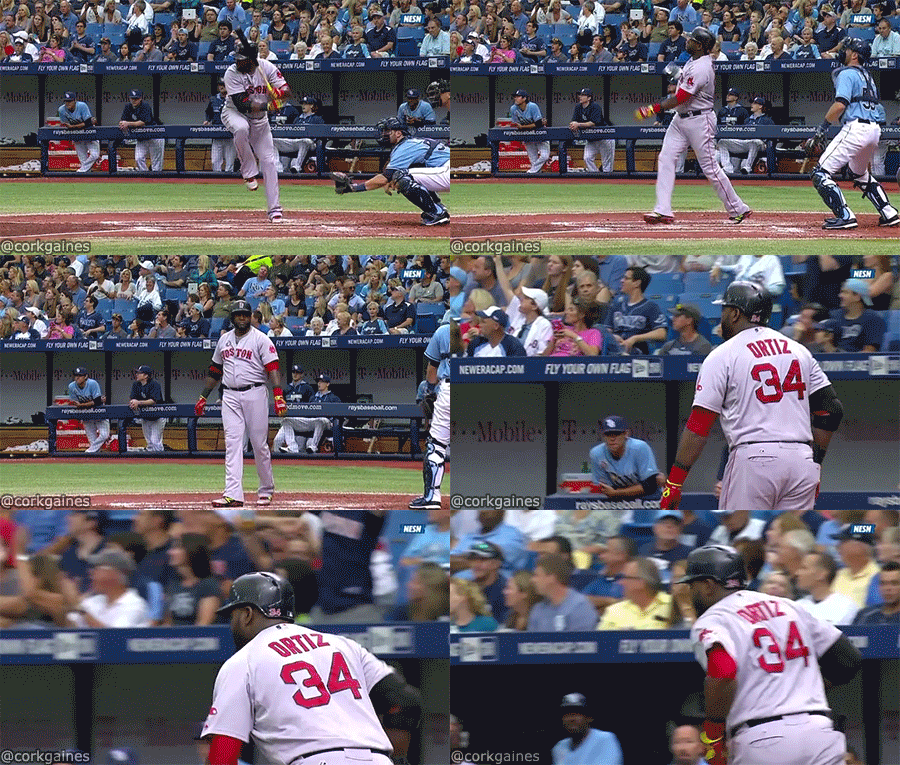
Still, for my money, the Red Sox don’t win the 2004 World Series without David Ortiz, and I don’t know this for a fact, but I can’t imagine Billy Beane liking that guy. In fact, The Red Sox already had Jeremy Giambi, who Beane was a big fan of in the movie (because he got on base), and he and Ortiz were platooning at first base, until Ortiz just started launching home runs and Giambi was eventually cut. Had Beane accepted Henry’s offer, would we have seen the kinds of battles that were shown in the movie between Beane and Howe over Ortiz and Giambi? Who knows? The only thing I do know is that David Ortiz, who could not run, play defense, or do much other than hit timely home runs, won three World Series with the Red Sox, and did it with such a flair that he will never have to buy a drink in this town again. His career on-base percentage is a very respectable .380, and he hit 547 regular season home runs in 20 seasons. But the most important stat? In 85 postseason games, he hit 17 home runs and drove in 61 runs. People like Billy Beane and Bill James believe it to be a myth, but to me, there really is something called clutch in sports, and Papi was the best clutch hitter in my lifetime.
In the end, Moneyball is an entertaining yarn with some snappy dialogue about a guy going against the grain and being proven right. If you’re someone who doesn’t want facts getting in the way of a good story, give it a watch. And please like, subscribe and share this Substack with friends who might like it. Also, check out my podcast, my comic and my RedBubble store. Or if you want to help keep the lights on, you can Buy me a Coffee.
Thanks, as always, to you for reading! Play ball!
Well, I've mentioned it before, but as I'm sure you know, it's awfully curious that "Moneyball" takes no time to really mention the actual great players on that team -- if you watch the movie, you'd think they were driven into first place by Hatteberg, Justice and Bradford. They don't want to mention Miguel Tejada, the year's actual MVP, because he was also known for juicing (another probable factor in the team's winning ways). They don't even want to mention how sabermetrics has thrived by allowing teams to avoid paying players who put up counting stats, making the audience think a star isn't necessary when you can Frankenstein two guys together to mimic a star, an approach that doesn't really work all that much.
And yet, I really enjoy the movie. The Hoffman/Howe thing is especially curious to me, because Hoffman is so volcanic, so funny in the role, but obviously he bears little resemblance to the real guy or his role on the team.
Fromtheyardtothearthouse.substack.com