

Roderick Toombs—the man who would become “Rowdy” Roddy Piper—was, as he liked to say, “rowdy before rowdy was cool.” In wrestling, that kind of bluster is usually marketing. In Piper’s case, it felt like autobiography.
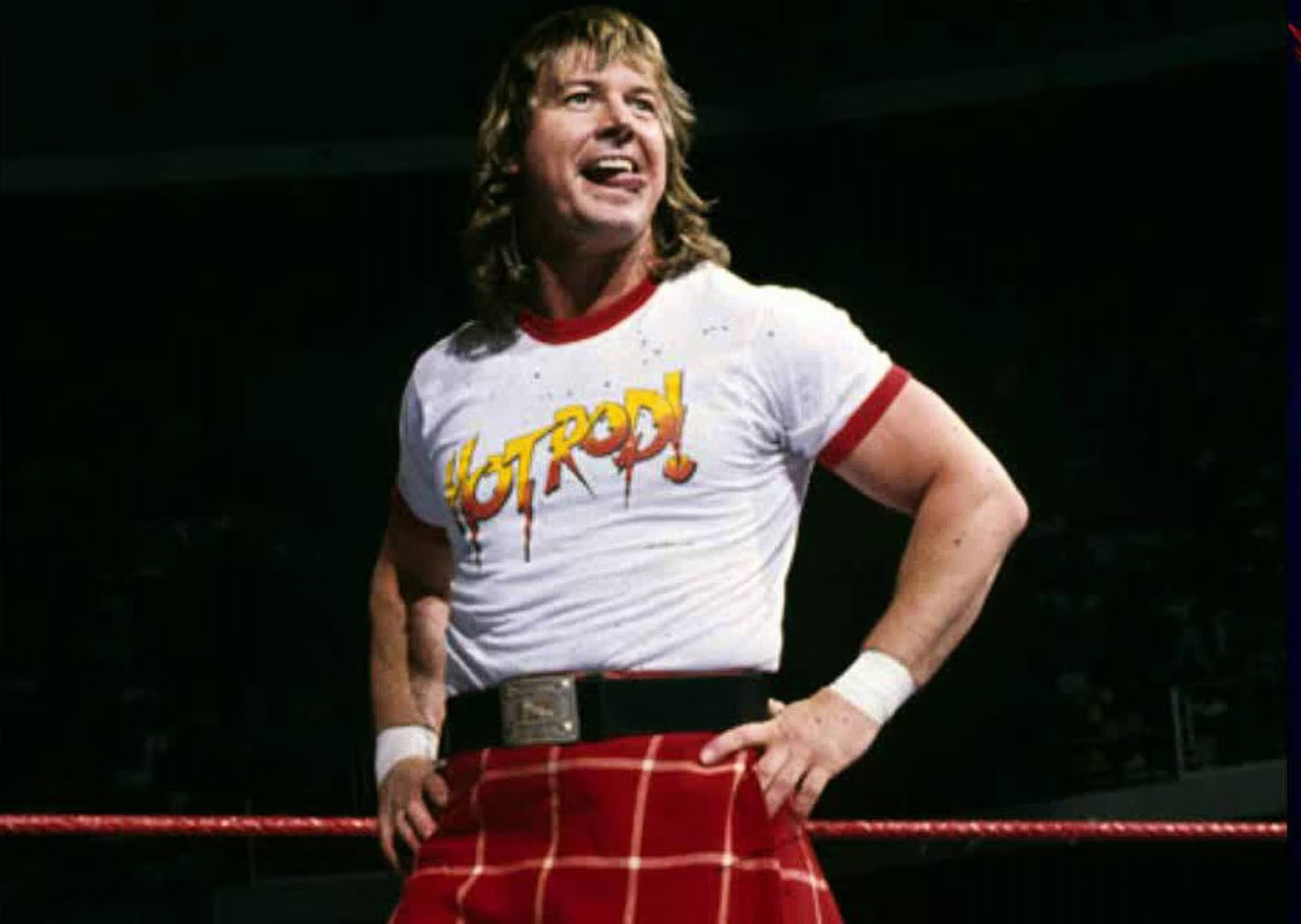
He broke into the business in late-’60s Canada after being expelled from school for carrying a switchblade, which already tells you a lot. He started as a jobber—wrestling shorthand for “the guy who loses”—and eventually landed in the American Wrestling Alliance in Minnesota. There, a happy accident cemented his persona: his friends played him to the ring on bagpipes, the announcer only knew his first name, and “Roddy the Piper” was born.
Piper wasn’t a big man by wrestling standards, so he compensated with his mouth. He could dismantle opponents on the microphone so effectively that fans believed he belonged across the ring from much larger wrestlers. As a heel, people paid good money just to see him get hit for the things he said and did—sometimes spectacularly so, as with the infamous Jimmy Snuka coconut incident.
That gift made him invaluable to Vince McMahon, who cast Piper as the perfect antagonist to Hulk Hogan during the WWF’s Rock ’n Wrestling expansion with MTV. Piper main-evented the historic first WrestleMania in 1985 alongside Paul Orndorff against Hogan and Mr. T, then boxed Mr. T at WrestleMania 2—a worked match Piper later admitted he wished had been real.
By 1987, Piper was at the peak of his popularity. After returning from a hiatus to thunderous cheers, he seemingly retired following a Hair vs. Hair match against Adrian Adonis at WrestleMania III. (I use “retired” loosely; wrestlers mean it about half the time.) What matters is that night changed his life anyway.
Backstage, Piper met John Carpenter.
Carpenter cast him as the lead in They Live, a slow-burn sci-fi horror film about alien control, subliminal messaging, and a society lulled into compliance. Piper plays Nada, a drifter who discovers special sunglasses that reveal the truth: billboards bark commands, money declares “THIS IS YOUR GOD,” and some people are very much not people.
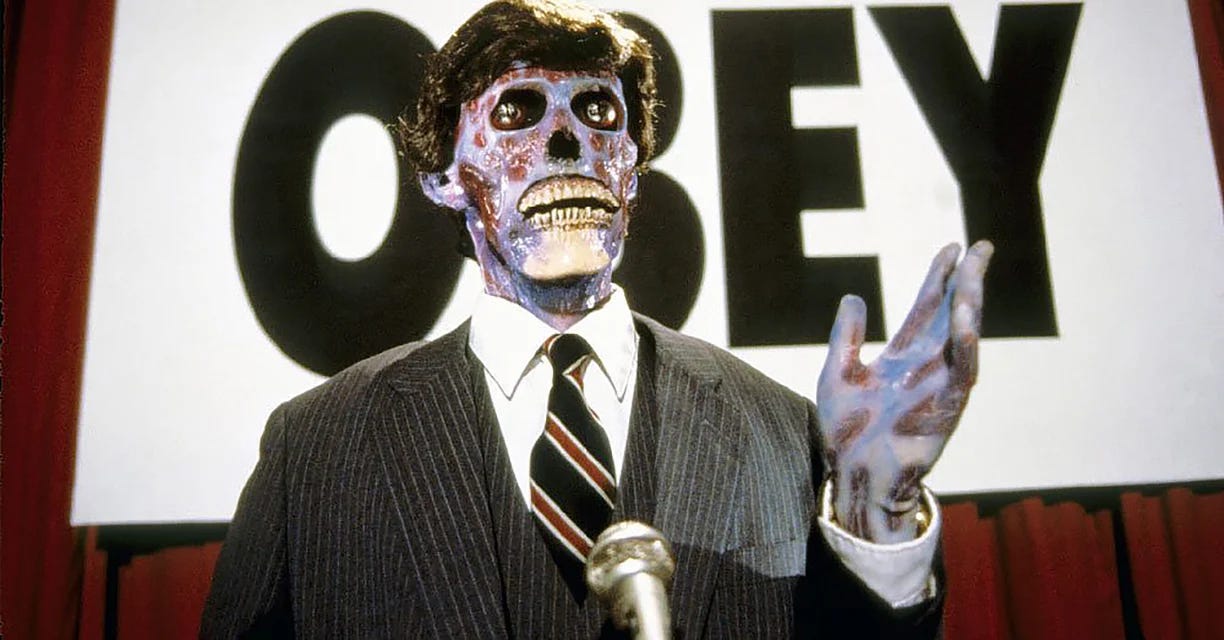
What’s striking now is how restrained Piper is. This is not Roddy Piper unleashed. He’s quiet, watchful, almost weary—until flashes of his wrestling persona break through, like when he insults an alien’s face “falling into the cheese dip back in 1957,” or delivers a short-arm clothesline that detonated my 13-year-old brain in the theater.
The famous bubble gum line—“I have come here to chew bubble gum and kick ass, and I’m all out of bubble gum”—was reportedly something Piper had written for wrestling promos. Carpenter saw it and knew exactly where it belonged.
And then there’s the fight.

The legendary alleyway brawl between Piper and Keith David—ostensibly about putting on a pair of sunglasses—was expanded because Piper used his wrestling instincts to help David sell it. It’s absurd, brutal, funny, and perfect. Wrestling logic applied to cinema, without winking at the camera.
As a kid, I liked They Live but didn’t quite get why Piper barely talked. Wrestlers in movies usually just play themselves—Jesse Ventura, Hulk Hogan, The Miz, take your pick. As an adult, it’s obvious Carpenter wanted something different. Piper delivers it. He proves he can act without relying on volume.
Despite dozens of later roles, They Live remains the high point of Piper’s acting career. Wrestling always pulled him back—sometimes for money, sometimes for nostalgia. In later years, he spoke openly about the physical toll of the business and the likelihood that he wouldn’t live long enough to enjoy his pension. He died in 2015 at 61.
Even now, Roddy Piper is mostly remembered for being loud—for bagpipes, insults, and bubble gum. That version of him is real, but it’s also incomplete. They Live works precisely because Piper doesn’t play the caricature; he plays a man waking up, and that restraint is what gives the film its weight. It’s proof that he didn’t need wrestling to be interesting—wrestling just happened to find him first. Plenty of wrestlers have crossed into movies, and plenty have played themselves. Piper disappeared into one, showed exactly how much more he was capable of, and then the door quietly closed. That, more than being rowdy, is the legacy that actually matters.
Thanks for reading, as always. Please do all the things to support starving Substackers. And if you want to hear a little more about They Live, my podcast mates and I covered it here:
Now get some bubble gum!
Fantastic breakdown of how Piper's restrained performance was the real flex. The part about Carpenter wanting something beyond the wrestling persona is key, most actors from that world never figured out they could just...act. I rewatched it last summer and was suprised at how much quieter Piper was compared to his ring work. That alley fight scene still holds up as one ofthe best.
I really enjoyed reading this. I'm a big fan of They Live and of Piper. I saw him wrestle a couple times in the last 80s. I've read a few books on him and watched most of his interviews. He had a tough life. It was fun to read about him again.