

With Netflix releasing a documentary on the guy, and Wrestlemania this weekend, it seemed an appropriate time to give my take on the Hulkster. Let me know what you think in the comments.
Sometime in 1985, my family got cable. I was nine years old, and it felt like the world suddenly got bigger. I don’t know if kids today can fully grasp what a big deal that was. Maybe they could if they went from six streaming services—one of them barely working—to a hundred overnight.
With cable came MTV. And with MTV came professional wrestling.
Wrestling didn’t just entertain me—it imprinted on me. It gave me heroes, villains, and a clear sense of right and wrong. And at the center of all of it was Hulk Hogan, a blond, tanned superhero who seemed invincible and spoke directly to kids like me. For a while, I believed every word of it.
But belief is a funny thing. You don’t always lose it all at once. Sometimes it fades slowly, long before you can explain why.
With MTV came the Rock ’n’ Wrestling Connection, my first real exposure to professional wrestling. It paired Cyndi Lauper with WWF good-guy wrestlers in a battle against the forces of evil - basically, bad guy wrestlers. It all escalated at a Madison Square Garden event called The War to Settle the Score, broadcast on MTV to massive ratings. The main event featured “Rowdy” Roddy Piper challenging WWF Champion Hulk Hogan.
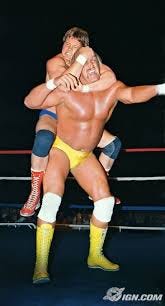
After Piper was disqualified due to outside interference (in reality, Piper refused to let Hogan pin him), he and his ally Paul “Mr. Wonderful” Orndorff continued the beatdown. Lauper tried to intervene, Piper and Orndorff threatened her, and suddenly Mr. T jumped the guardrail and chased them off. That moment set the stage for the first WrestleMania—and created a lifelong wrestling fan in me.
By that time, Hulk Hogan was the guy. Tanned, blond, and billed as having 24-inch biceps—his “pythons”—he was a real-life superhero who told kids to train, say their prayers, and eat their vitamins, his so-called “three demandments.” Fans ate it up. To his credit, Hogan played the role expertly and helped ignite a wrestling boom unlike anything seen before.
But it hadn’t always been that way.
In the late ’70s and early ’80s, Hogan was a villain, feuding with heroes like Andre the Giant around the world. While working for the then-WWWF, Hogan asked for time off to film Rocky III. WWWF owner Vince McMahon Sr. hated the idea of wrestlers breaking character to appear in movies and refused. Hogan decided to quit and do the movie anyway.
That decision paid off. After the exposure from Rocky III, Hogan could write his own ticket in wrestling. He became the top star in the AWA until Vince McMahon Jr. lured him back with more money and a plan to expand the rechristened WWF nationally using cable television. Hogan was to be the cornerstone. McMahon bought up smaller promotions for their TV timeslots and raided talent from those who refused to sell. The AWA didn’t survive.
For the ensuing years, Hogan ruled wrestling, headlining sellout after sellout—including WrestleMania III against Andre the Giant, still one of the largest indoor crowds in wrestling history (despite WWE’s famously inflated numbers). Hogan faced a rotating cast of villains, but the matches grew painfully formulaic: the comeback, the “Hulk up,” three punches, a boot, a leg drop, maybe a body slam if the opponent was fat, and then the posing. If you’ve ever seen any athlete cup their ear to the crowd, this is where they got it from.

The formula became so ingrained that Vince’s mantra backstage was simple: No matter what happened during the bout, in the end “Hogan must pose.” And why not? The money kept pouring in.
But the cracks were forming—at least for me.
As I entered my teenage years, Hogan’s act felt stale. I gravitated toward the more athletic, less preachy “Macho Man” Randy Savage. So did the WWF. In 1988, Hogan and Savage were put together to form the “Mega-Powers” tag team, and Savage briefly took the top spot while Hogan left to star in No Holds Barred, playing—showing his range—a heroic professional wrestler named Rip Thomas.
The movie flopped. So they brought the film’s villain, Zeus (played by Tiny Lister), into WWF storylines in an attempt to squeeze out more money.

By 1990, Hogan’s act was undeniably tired. He dropped the title to the Ultimate Warrior at WrestleMania VI—though not without theatrics that suggested he’d be back. He then starred in Suburban Commando, another box-office dud. True to form, by WrestleMania VII, Hogan was champion again, defeating Iraqi sympathizer Sgt. Slaughter in one of the more bizarre and tasteless storylines of the era.
A year later, the cheers were softer. Merch sales dipped. Vince McMahon was under investigation for steroid distribution, and Hogan—39 years old and very much emblematic of the problem—was asked to step away. But when WrestleMania IX struggled to sell tickets, Hogan returned, wasn’t even booked in the main event, and still walked out champion. And yes, at the end of the night, Hogan did pose.
Three months later he was gone again, but this time, Hollywood didn’t want him either. Mr. Nanny bombed. Thunder in Paradise lasted one season. In 1994, Hogan jumped to the rival promotion, WCW, with heavy creative control, brought his friends along, and initially boosted business—until fans started booing the same tired act.
So WCW did the unthinkable in 1996: they turned Hogan heel. Training, prayers, and vitamins were gone. Enter “Hollywood” Hulk Hogan.
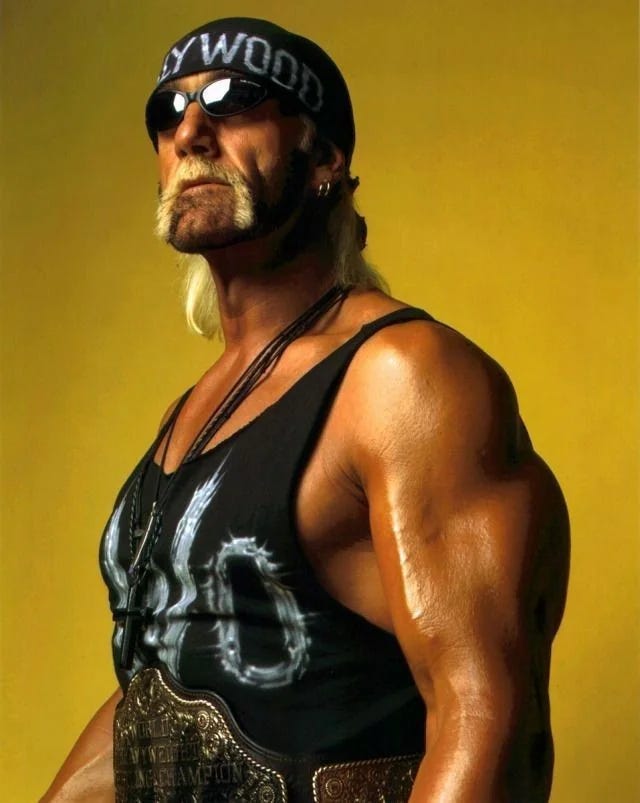
It worked—briefly. WCW overtook WWF on the strength of Hogan and the nWo. But Hogan still couldn’t let go of the spotlight. He constantly beat fan favorites, spray-painted them, and even brought back the Ultimate Warrior just to get his win back. He made more forgettable movies. WCW soon spiraled.
By the late ’90s, WWF was pushing fresher stars like “Stone Cold” Steve Austin and The Rock, while Hogan felt very obsolete. The old formula no longer worked.
Until nostalgia kicked in.
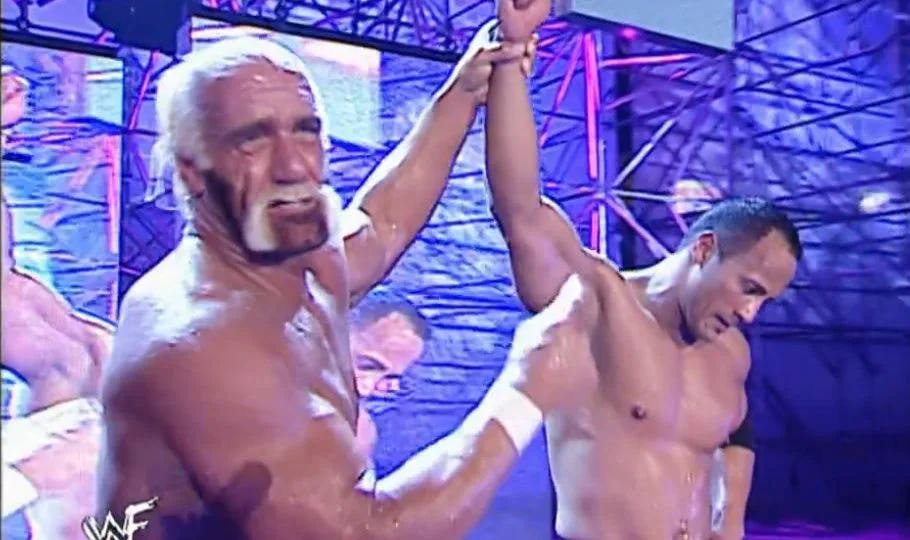
After Vince McMahon bought WCW in 2001, Hogan was brought back home in early 2002. At WrestleMania X-8, Hogan faced The Rock in a battle of ages—and the crowd lost its mind. Suddenly, it wasn’t “Hogan must pose,” but “Please, Hogan. Please pose.” It was a great moment, and it marked the peak of his late-career run.
Then came the scandal.
In 2015, secretly recorded audio - during a sex tape, mind you - surfaced in which Hogan used racial slurs repeatedly and admitted, “I am racist to a point” in regards to his daughter’s black boyfriend. WWE cut ties immediately. Hogan later sued Gawker for publishing the tape and won $140 million, bankrupting the company in a landmark privacy case. Being racist had never been so profitable.
He apologized, blamed his upbringing, but in 2024, while campaigning for Donald Trump, made racist and sexist remarks about Kamala Harris, asking a crowd of Trump supporters if she was “Indian” and if she should “bodyslam” her. Subtlety was never his strong suit.
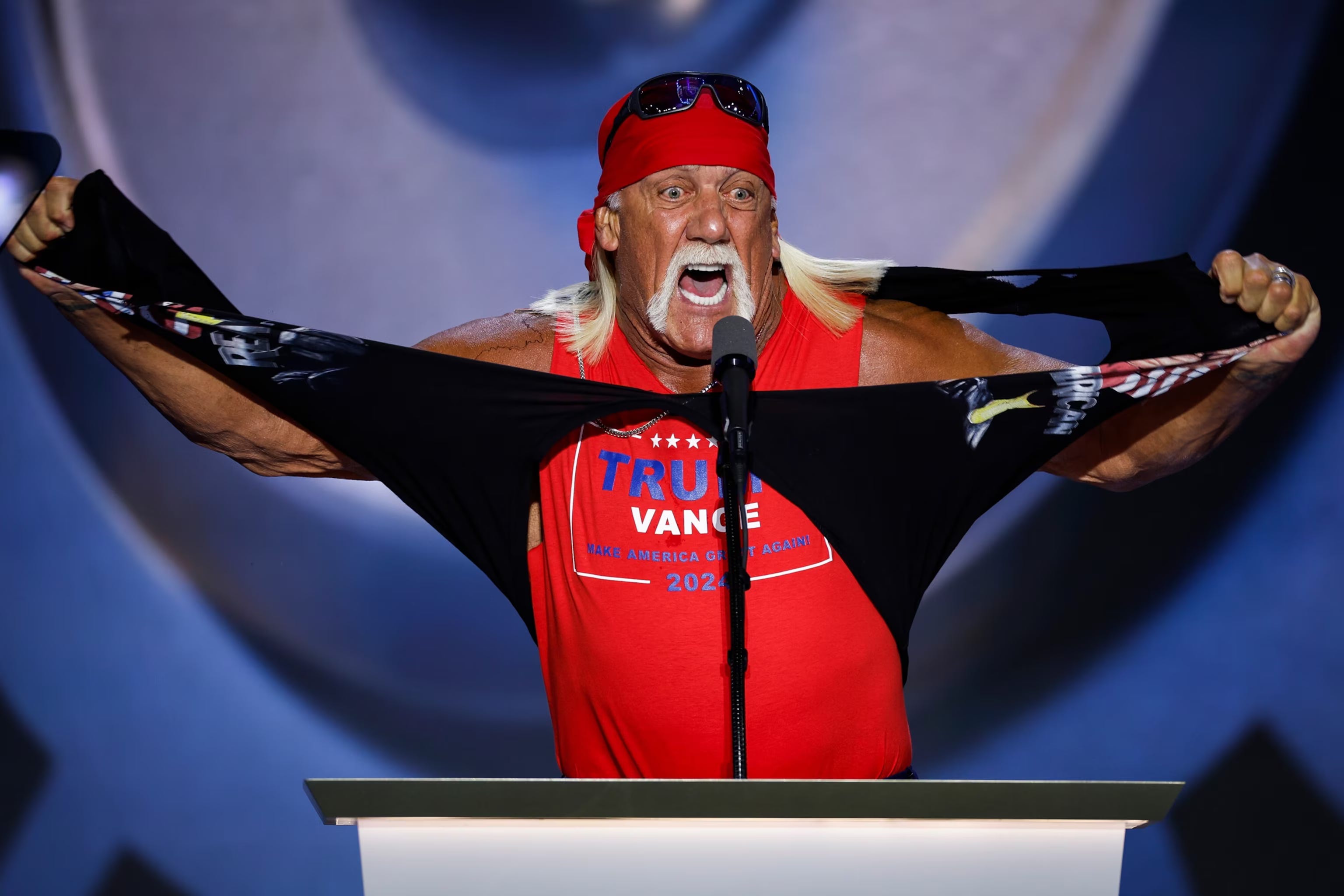
That was the last most of us saw of him. Hogan died in July of 2025 of a heart attack following neck surgery. Some speculate complications, or years of steroid use weakening his heart. I’m no doctor, but if I were, I might list the cause of death as bad karma.
When Hogan died, I read a lot of tributes about what he meant to people. How he inspired them. How he was their hero. And I kept wondering why I couldn’t quite access that feeling anymore. Why I couldn’t just like him the way I did when I was twelve.
The truth is, I think I stopped believing in Hulk Hogan long before the sex tape, long before the politics, long before the lawsuits. I didn’t have the language for it yet, but I felt it. The act grew stale. The posing felt empty. The wrestling business always had to bend back toward him. He would fail in Hollywood and just return to his wrestling throne like it was something that he was owed. Even as a kid, something about it didn’t sit right.
So when the rest finally came out—the racism, the ego, the entitlement—it didn’t feel like a betrayal. It felt like confirmation.
That’s the strange thing about idols. We think we abandon them, but sometimes we’re just catching up to what we already knew. Hogan didn’t ruin my childhood. He just stopped being able to hide behind it.
I still enjoy wrestling. I still watch it, forty years later. Hulk Hogan was the doorway, not the destination. Once I walked through it, I didn’t need him anymore.
I guess that’s what growing up actually looks like.
Thanks as always for reading. Please consider liking, sharing and subscribing. And if you really want to help, I have a few demandments of my own: I have a comic that I wrote, an Ebay storefront that sells some wrestling merchandise, and I do a podcast.
Thanks again, bruther!
As a kid, any time I tried to watch wrestling my father would say the most ‘80s Boston thing ever and make me change the channel. “Wrestling is fake. Marvin Hagler could beat up Hulk Hogan.”
The only thing more Boston would have been a reference to Larry Bird’s superior trash-talking ability.
In my mind, he WAS professional wrestling- he embodied all of its postivie elements, contradictions, and absurdities better than anyone else. You'd have to go back to the pre-WWF era, to the equally flamboyant "Gorgeous George", to find his true equivalent.
Once upon a time, in the early 20th century, pro wrestling was a legitimate sport, and champions like Frank Gotch and George Hackenschmidt were seen as legimitate athletes. However, television, and the WWF, changed all of that. It became more about selling a personal "brand" than actually being a good athlete. Hogan was fortunate in that he possessed a very magnetic personality and "brand" while still being more of a competent athlete than a lot of his peers. For better or worse, his career defined what the WWF/E was, is, and is supposed to be much more than anyone else.